I didn't know this existed, but came up in a search of my fathers friend , Frank Tisdale.
Monday, 11 December 2023
Tuesday, 21 June 2022
Scanning Old Photos Part 2
![]() |
Preston My Mothers family. Back row L to R: Margaret Ann, John, Sarah [Mother] Front: Norman [Father], Jane |
![]() |
| Annie Cresswell pre WW1 |
![]() |
| Annie Anslow (nee Cresswell) my Grandmother |
![]() |
| Dennis and Beatrice Anslow |
![]() |
| Dennis and Beatrice Anslow Wedding Party in 1944 |
![]() |
| Young Denis Anslow |
![]() |
| Denis, Beatrice and my mother Ann Anslow |
![]() |
| Edward John Taylor History Link |
![]() |
| Unknown |
Wednesday, 8 June 2022
A little History - A lady Holding a Rose
My Mum remembered when my maternal grandfather came home with his find from a second hand shop. He appreciated the painting but never knew of its significance or value. Today it is on loan to the Birmingham Museums Trust https://artuk.org/discover/artworks/a-lady-holding-a-rose-33768
Thursday, 19 August 2021
Memories and Observations
I look at today's problems and wonder if humanity is prepared or strong enough to handle what their parents, grandparents and great grandparents did in the past. Today we are used to a lot of creature comforts and haven't experienced real hardship. We are used to having what we want and not making do. Wars happen in far flung places and don't make regular headlines......
My parents clearly remembered WWII, Then they lived in the West Midlands in the UK, away from the German bombing of London and other key cities. Even so there were many incidents when lost German planes would drop their bombs in the countryside so they would have enough fuel to get home.
My dad spoke of the bombs, shattered glass and the one occasion of a crashed German plane near home in Walsall Wood.
My Mother, in her later years, wrote about her childhood experiences in nearby Brownhills. here is an extract.
"Growing up during the war years I guess I didn’t realize the seriousness of it all for some families, living in a small coal mining village I didn’t have to go and live somewhere else as a lot of children of my age and be taken in as an evacuee and we used to joke and play around with our gasmasks not realizing what it would be like if we ever need to use it.
The nearest we got to being bombed was one night when we were under the stairs in the pantry with a chamber pot in case of emergencies when we heard an aircraft flying very low and then there was a big bang and all the glass in the windows in our row of houses in the street were shattered. A bomb had been dropped in the field at the back of the houses the only fatality was a horse that used to pull the ice-cream cart. All the children were very upset. After that the owner invested in a motorised van but it didn’t seem the same as the children all patted the horse and gave him a name.
We used to go into a cellar in some unused cottages near us until my mother fell and hurt her ankle carrying my baby sister. I remember one night I was knitting away when two American soldiers came down into the cellar and gave me some chewing gum it was the first chewing gum I had ever had and I thought that it was strange that you had to not swallow it after it started to taste awful.
The nearest City to us to be bombed was Birmingham (edit: and also Coventry) you could hear the planes fly and making a path and see the sky light up from the fires. My dad was in the Home Guard as he was exempt from being called up so our family didn’t realize what it was like to have a father or husband that had gone to war. "
Ann Anslow (Nee Preston).
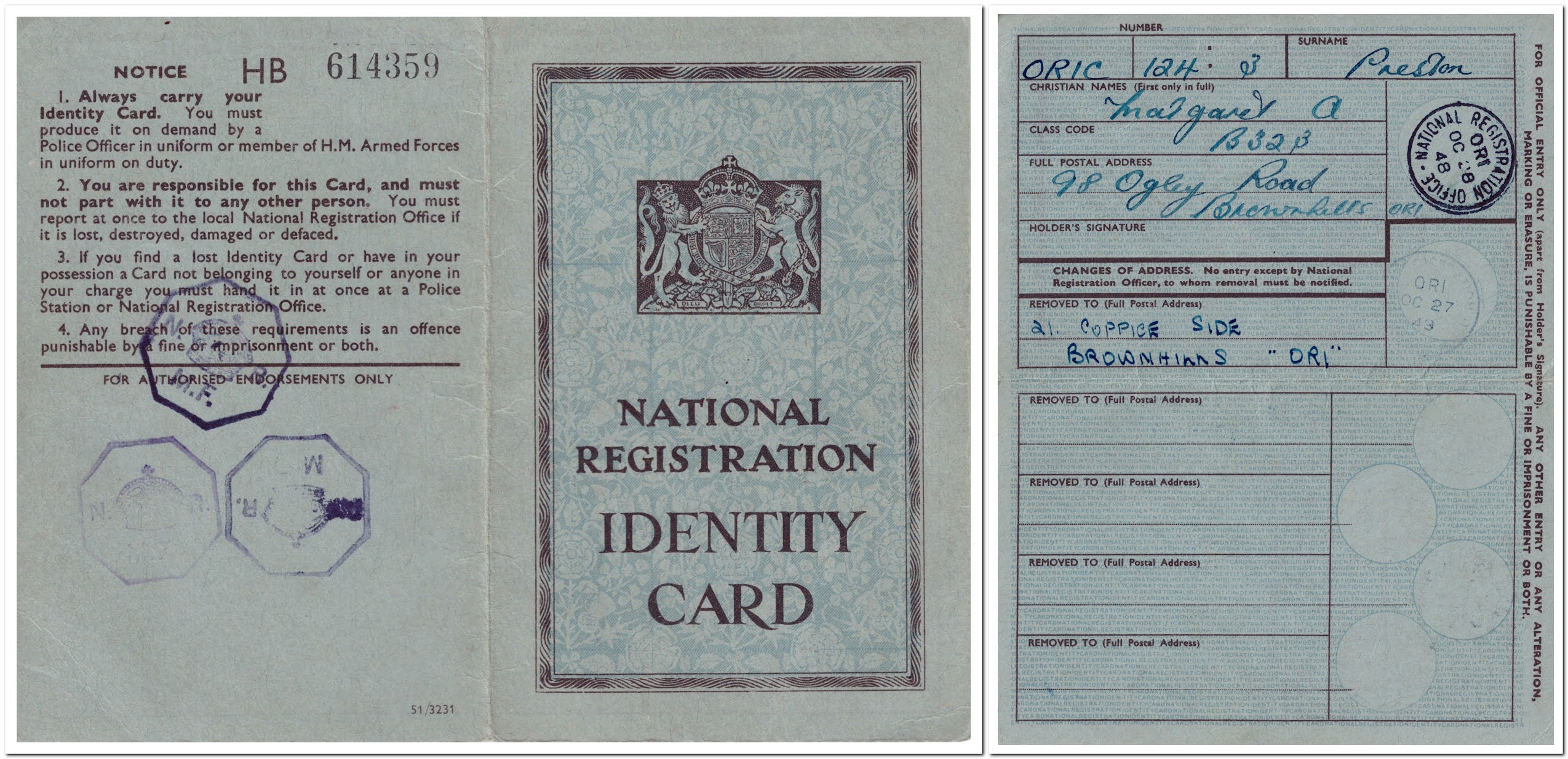
During the war and until 1954 there was rationing of food in the UK
My mother was expected to look after her two siblings Jane and John as her mother was often unwell. (possibly clinically depressed) She cooked and cleaned along with attending school. With Mums dad, Norman being a butcher, meant a reasonable standard of living, but life still wasn't easy.
My Dad's father passed away when he was 6 years old and as a result life was even tougher for him and his older brother Dennis, living in Walsall Wood near the pit. His mother Annie, supplemented a meagre miners pension by taking in washing, ironing and was the midwife, common in a time where it was standard for childbirth to occur at home. Dennis worked to support the family.
My parents knew hardship was and I do wonder what they would think of today's world where people struggle to comply with some lockdown rules.
We were supermarket shopping when I saw a man in his 20s having a meltdown because his favourite shampoo was unavailable!
Friday, 25 January 2019
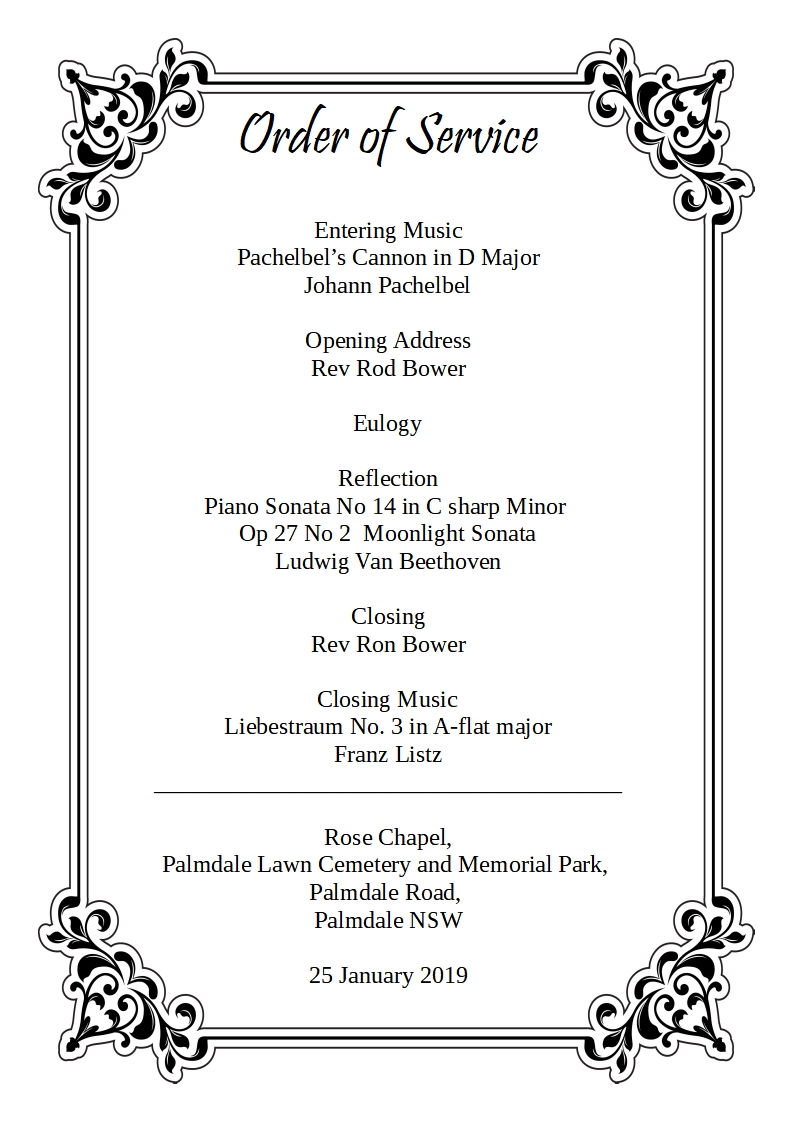
Goodbye Dad
Thursday, 14 April 2016
One Hundred Years Ago
Mum had a badly creased and faded photo which she successfully Photoshopped and on the back in pencil his name and date of death.
I have been researching the family tree and was interested to learn more about my Great Grandfather and thought that the UK Ministry of Defence might hold the records. These are now held at the National Archives in Kew, Surrey, with Ancestry.com providing access to these electronically. I searched there without success, and found out why....
It is widely known that the majority of British WW1 soldier’s army service records went up in smoke when the War Office warehouse (the Army Records Centre) where they were stored was hit by a German incendiary bomb in an air raid in 1940. It is less well known that many other records were also destroyed. For researchers of the Great War, it was catastrophic.
Dad alerted me to some folders Mum had, a collection of Genealogy records which she had started with and hadn't completed. In the collection was several documents including the following;
Edward's Birth Certificate, born 2nd of October 1875 to parents Edward and Sarah (Nee Thomas) Taylor in Lichfield, Staffordshire, England.
A Wedding Certificate: On the 1st of July 1904 Edward and Mary Ann Tolley were married in the Walsall Registry Office.
A Medal Record: Edward was 40 years old who, according to the medal record, was Killed in Action.
Below is the Medal Record for
Private Edward John Taylor
This confirmed my earlier research which had been based on some assumptions. I had located this record from the Commonwealth War Graves Commission, both having the same name (Very Common), but having the same unique Service Number 9742, now confirmed.
7th (Service) Battalion
records.co.uk/units/1715/north-staffordshire-regiment/
The Siege of Kut-al-Amara (1915-1916)
Major-General Townshend’s forces were surrounded by Turkish forces on 7 December 1915. He calculated that he had enough food supplies to last two months and decided to hold out until relief came. He had 10,000 men at this point, but was encumbered with 2,000 sick and wounded as well as non-combatants and the local population of Kut. The relief effort mounted by the British stalled because there were no proper roads or railways and the river levels fluctuated widely so that navigation was difficult.
Meanwhile the conditions inside Kut deteriorated. Disease and lack of food reduced the garrison to a pitiable state and the soldiers were forced to slaughter horses and mules for food. When relief failed to arrive and negotiations by Colonel T.E. Lawrence (of Arabia) failed, Townshend had to surrender his 10,000 troops (British and Indian) to the Turks on 29 April 1916. The prisoners of war were harshly treated and 4,000 died in captivity. This was the fate of Thomas George Irons (1st Btn OBLI) who died of dysentery on 8 May 1916. Henry Grace DCM (1st Btn OBLI) died of disease on 21 April 1916 at Kut, during the surrender. He had been decorated for conspicuous gallantry at Kut-al-Amara. Frederick George Parslow (1st Btn OBLI) accidentally drowned in the River Tigris whilst transferring from one boat to another, on 31 May 1915.
The surrender at Kut-al-Amara was a humiliating blow to the prestige of the British Empire and the British government took over control of the Mesopotamian campaign from the Indians in the summer of 1916. Much investment was made in the port facilities at Basra, new roads and railways were built and modern weaponry supplied. Under General Sir Stanley Maude, British troops retook Kut-al-Amara in February 1917 and occupied Baghdad in March.
Disease was still a major cause of death amongst the troops and Thomas William Lee (also of the 1st Btn OBLI) died of dysentery or cholera on 1 August 1917. General Maude also succumbed to disease and died of cholera in November 1917. The British effort was then scaled down and the armistice with Turkey on 30 October 1918 effectively ended the campaign, which had cost the British army 27,000 fatalities, 13,000 of whom had died of disease.
The fulltext can be found at http://amershamhistory.info/wp-content/uploads/2015/06/K2.pdf
One could hardly imagine what these soldiers went through!

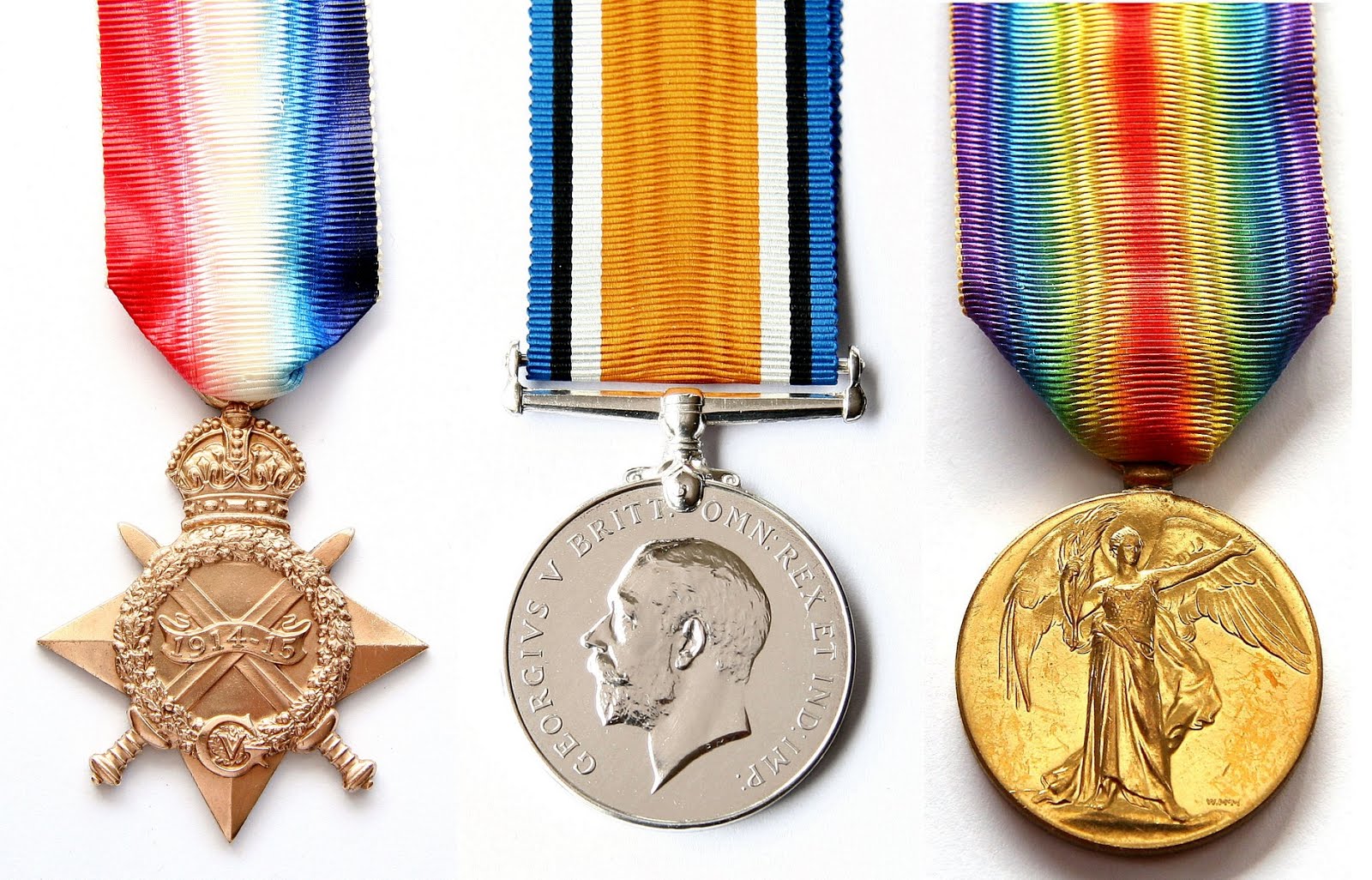
The 1914-15 Star, British War Medal and Victory Medal, as per the record for
Private Edward John Taylor
The Basra Memorial
before the desert sands did their work.
As Feargal Keane, BBC Correspondent says:
"Curiously Saddam Hussein preserved this monument. He had it moved, carefully, from the port to the desert but did not destroy it. 'Perhaps he had some feeling for the fallen warrior,' a British officer said to me..."
"Over the decades the desert winds have done their work: segments of the slate have collapsed on the ground. There are little fragments of names scattered in the sand. A large crack has appeared where the men of the Western Ontario Regiment are remembered. Nearby is a sentence as sad as any I've read in war. It says simply: For Subhadar Mahanga and 1,770 other Indian soldiers."
______________________________________
Friday, 12 June 2015
Scanning Old Photos Part 1
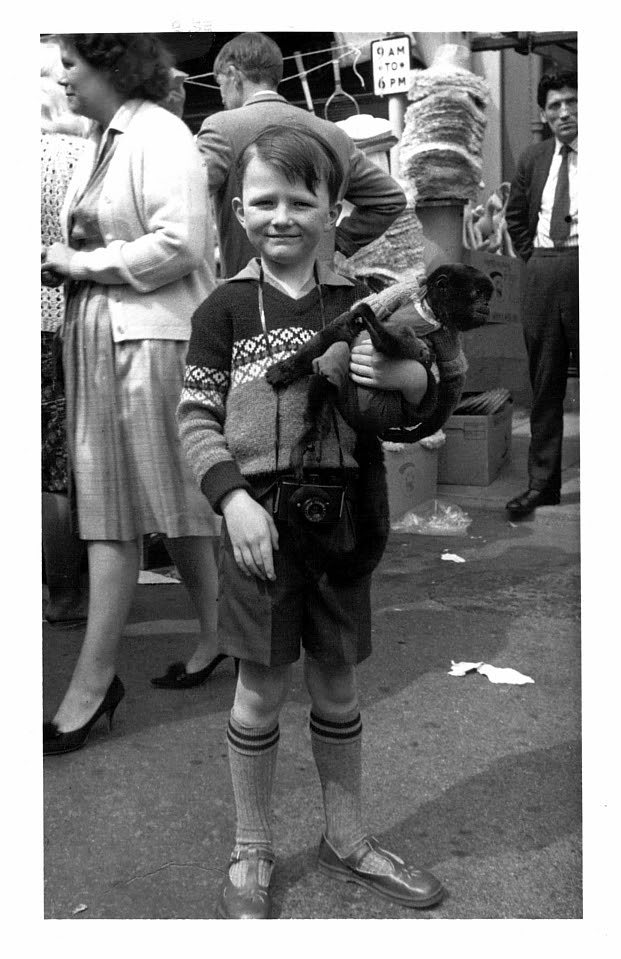
Me at 5 years and a Monkey at Lichfield Bower
School onboard the Castel Felice on the way to Australia 1964
Tom and Ann Anslow leaving on their honeymoon at Trent Valley Station Lichfield 1952
Tom and Ann Anslow watching the cricket.
Ann Anslow and I at Tascott c1990
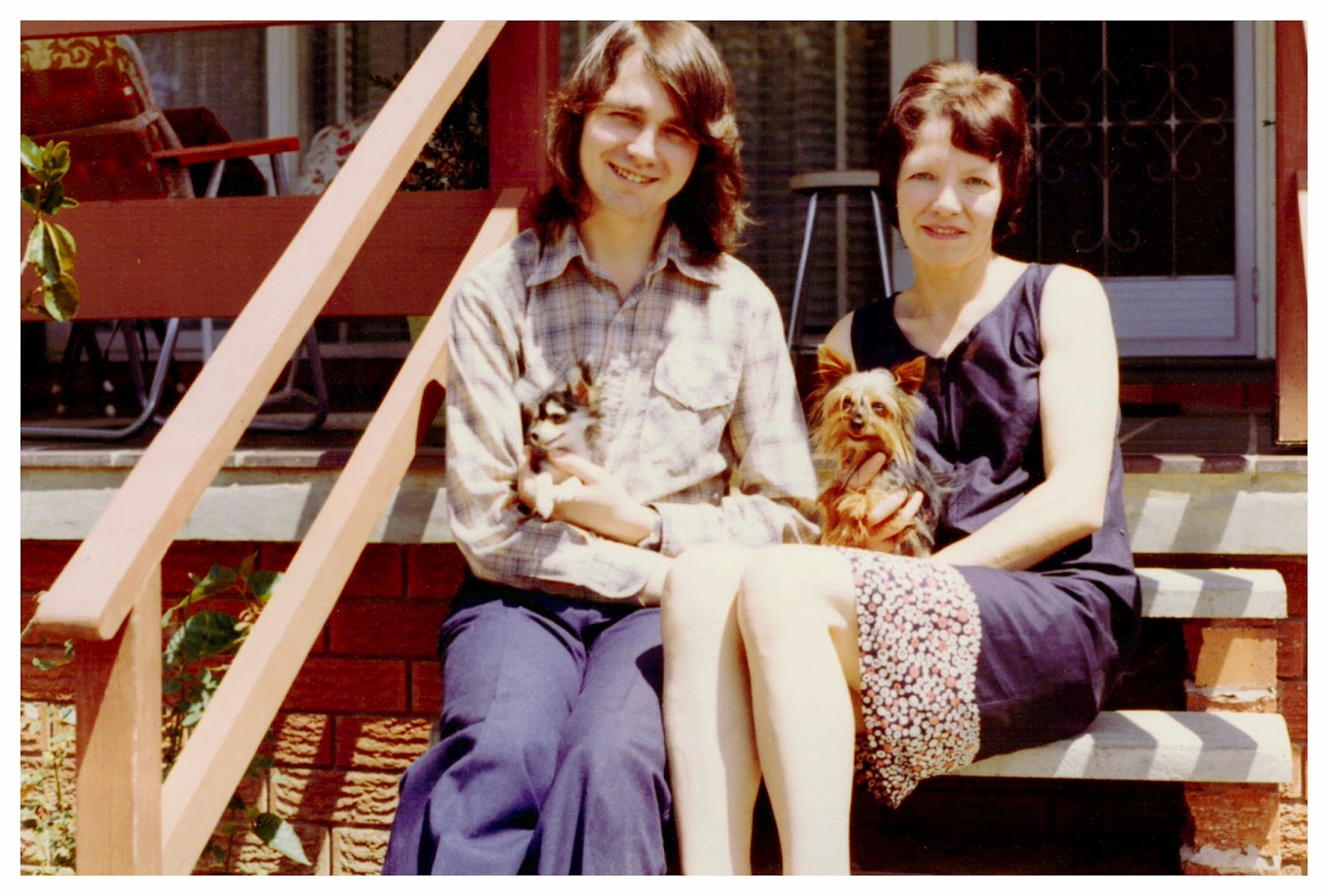
Ann Anslow and I at Epping 1978
Tuesday, 30 December 2014
Goodbye Mum
Sunday, 18 December 2011
Old Colour Slides
Scanning the family Colour Slides.
Here is a Before and After - Me on Christmas 1964, Our home in Whittington, Lichfield, England.
In 1965 on the way to Australia on the T/V Castel Felice.
Mum is wearing the pink top and I'm hanging onto the railing.
Mum and I.
In 1964 on the way to Australia on the T/V Castel Felice at Aden, Federation of South Arabia, now part of Yemen.
Trevallyn, Launceston, Tasmania in 1965. My primary school can be seen and the cream coloured house, top left hand side was our home. The hilltop is now built up.
A visit to Cradle Mountain, Lake St Clare National Park in 1968
Our back garden at Fairthorne Rd Trevallyn with Kim our Rescue Dog 1969
Sniffy the cat and I at Kootara Place, Trevallyn 1971
Dad at work 1976
Wednesday, 6 October 2010
A coincidence and a little family history
The Brownhills Colossus A.K.A Jigger
During Our UK Trip in 2009 I took the photo above when visiting Brownhills where my mother had lived as a child and where my parents met.Sunday, 26 September 2010
1964 - Castel Felice on route to Australia.
Arriving on board at Southampton.
A photo of me with some other bewildered kids struggling with the lady's Italian accent.
I'm the one second on the left of the lady reading.
I remember that not long out of Southampton we experienced a severe storm in the Bay of Biscay. our cabin was located on deck C, forrad and to port, the small porthole spent most of the time underwater. We were seasick along with most of the passengers and crew. The best thing to for seasickness is to be on deck, so we did, I remember being in a saloon at night watching the storm.
My Mum and Dad sitting closest on the right. there was two sittings, one separate for the children
A lapel badge
Our voyage took us though the Suez Canal, the Ship stopping at Port Said, Aden, Fremantle, Melbourne, finally arriving in Sydney. We disembarked at Station Pier in Melbourne and traveled the last leg to Launceston, Tasmania, by plane, an Ansett ANA Fokker Friendship
The Castel Felice has quite a history. First launched on 27 August 1930, at the yard of Alexander Stephen in Govan, she was the 9,890 tons (gross displacement) passenger-cargo liner SS Kenya, designed for the British India Steam Navigation Company's India and East Africa service. She then became HMS Hydra, a troop carrier for Royal Navy in World War II, then converted to an armed infantry landing ship, HMS Keren, she saw service in various roles, including the invasion of Sicily and Italy. In 1949, Kenya underwent a complete conversion for the liner services and entered Sitmar service as the Castel Felice in 1952.
At 12,400 tons she carried 596 cabin passengers and 944 emigrants. Castel Felice made her first voyage to Australia in 1952 but made only a few cruises from Sydney. She made a number of liner voyages from Europe to the Americas before being sold for breaking up in Taiwan in 1970.
-
Arriving on board at Southampton. A photo of me with some other bewildered kids struggling with the lady's Italian accent. I'm th...
-
I had some time after an appointment and went on a walk. Here are some of the things spotted. Darling Harbour , an outdoor space with Conf...